VII. 전차
VII. The Chariot
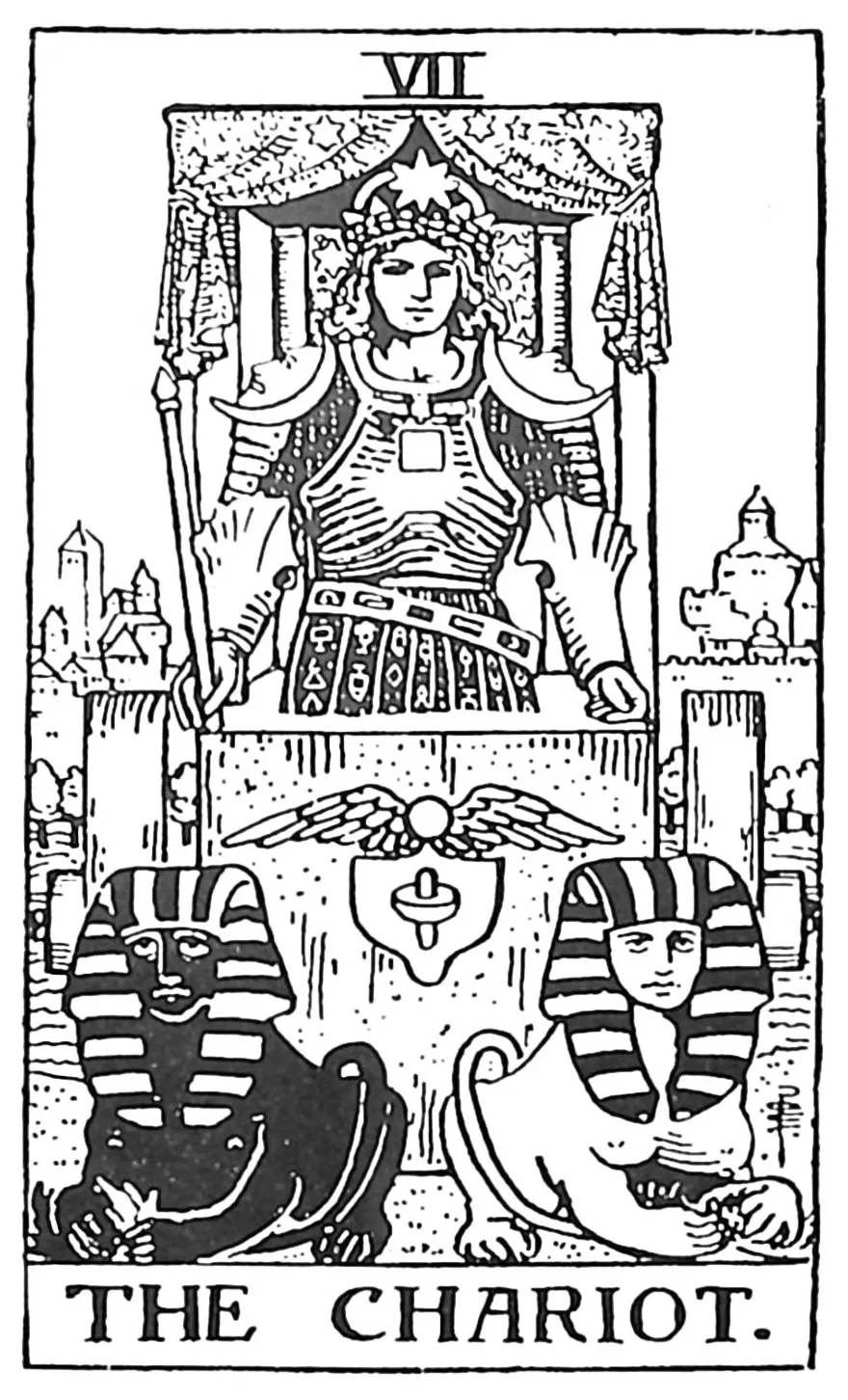
VII. 전차
뽑아 든 검을 든 곧고 왕자다운 형상이다. 대체로 제1부에서 제시한 전통적 설명에 대응한다. 승리한 영웅의 어깨에는 우림과 둠밈이 있다고 한다. 그는 포로를 사로잡았고, 모든 층위에서 정복을 이루었다. 정신에서, 과학에서, 진보에서, 그리고 특정한 입문 시험에서다.
그는 스핑크스에게 대답했으며, 이런 이유로 나는 엘리파스 레비(Éliphas Lévi)의 변형을 받아들였다. 두 스핑크스가 그의 전차를 끈다. 그는 무엇보다 정신 안에서의 승리다.
그러므로 다음을 이해해야 한다. (a) 스핑크스의 질문은 은총의 세계가 아니라 자연의 신비에 관한 것이다. 은총의 세계에 대해서라면 전차를 모는 자도 답할 수 없었을 것이다. (b) 그가 정복한 층위는 드러난 외부의 층위이며, 그의 내면이 아니다. (c) 그가 이룬 해방은 그 자신을 논리적 이해의 속박에 남겨 둘 수 있다.
(d) 그가 승리하며 통과한 입문 시험은 물리적 또는 이성적인 것으로 이해해야 한다. (e) 그가 여사제가 앉아 있는 성전의 두 기둥 앞으로 간다 해도, 토라라고 불리는 두루마리를 열 수 없다. 여사제가 질문한다 해도 그는 대답할 수 없다. 그는 세습 왕족이 아니며 사제직도 아니다.
영문 원문 보기
VII The Chariot
An erect and princely figure carrying a drawn sword and corresponding, broadly speaking, to the traditional description which I have given in the first part. On the shoulders of the victorious hero are supposed to be the Urim and Thummim. He has led captivity captive; he is conquest on all planes--in the mind, in science, in progress, in certain trials of initiation. He has thus replied to the sphinx, and it is on this account that I have accepted the variation of Éliphas Lévi; two sphinxes thus draw his chariot. He is above all things triumph in the mind. It is to be understood for this reason (a) that the question of the sphinx is concerned with a Mystery of Nature and not of the world of Grace, to which the charioteer could offer no answer; (b) that the planes of his conquest are manifest or external and not within himself; (c) that the liberation which he effects may leave himself in the bondage of the logical understanding; (d) that the tests of initiation through which he has passed in triumph are to be understood physically or rationally; and (e) that if he came to the pillars of that Temple between which the High Priestess is seated, he could not open the scroll called Tora, nor if she questioned him could he answer. He is not hereditary royalty and he is not priesthood.